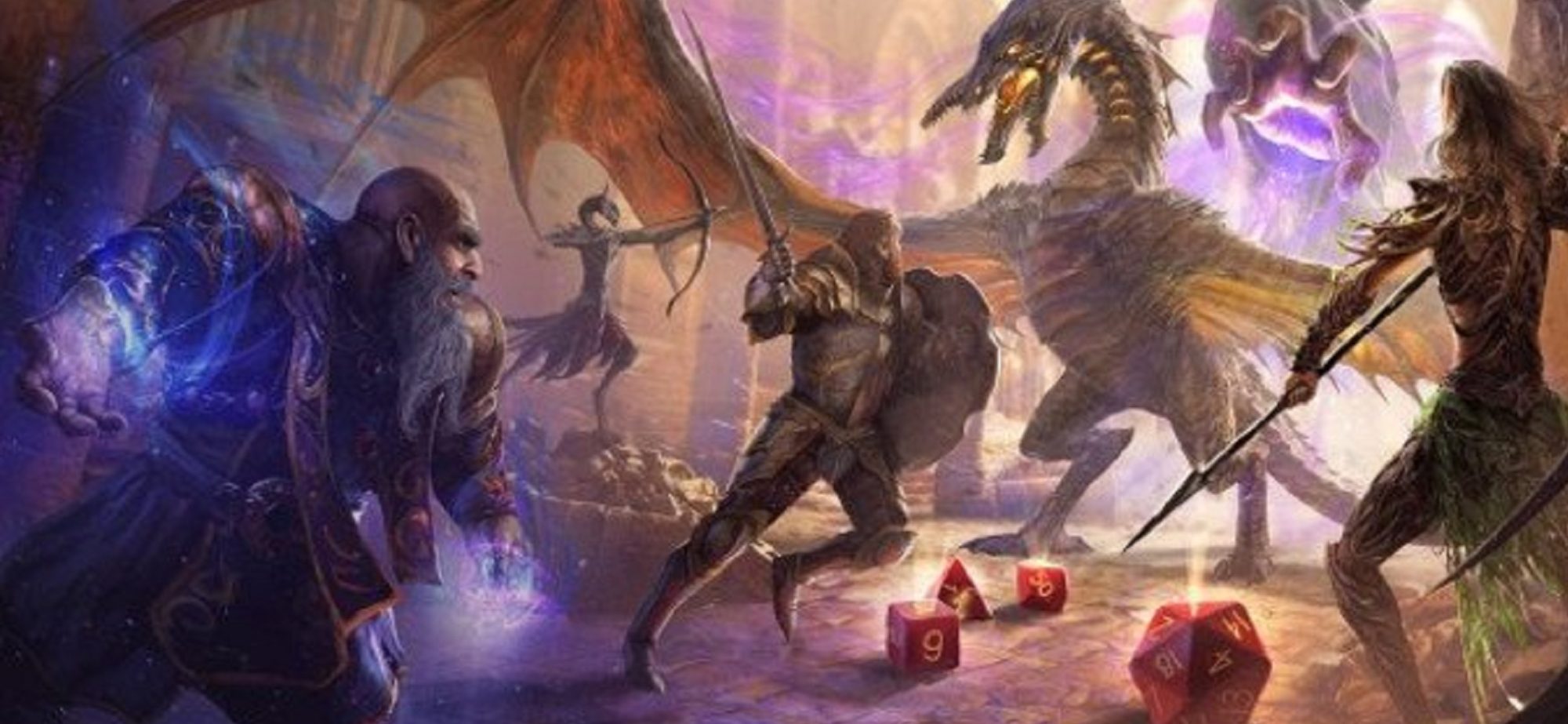
Radiance has many playable races. Here’s an overview of how each one tends to look and behave, along with their stat adjustments. Full rules for each race are in the rulebook.

Human
+2 to any one characteristic.
Humans stand 5 ft to 6¼ ft high and average 100 to 180 pounds. They are the most common and the most varied of all mortal humanoid races, coming in many sizes, shapes, and colors.
They tend to settle in river valleys, seasides, and plains where agriculture, fishing, commerce, and construction are easy.
Humans are often viewed by the other races as ambitious, corruptible, flexible, heroic, prideful, prolific, and shortsighted to the point of tragedy. Humans are incredibly varied in their moral and ethical outlooks as well as interests and skills. Human communities can vary greatly from each other.Humans are generally dedicated. Since they lack a single unifying culture, individuals tend to embrace kin, kingdoms, religions, and ideals. A clash of ideals often results in bitter rivalries, bloody wars, famous romances, heroic sacrifices, and ingenious inventions.
Due to diversity, human communities tend to harbor individuals of many talents. This makes them well-equipped to adapt to challenges. This also helps them welcome other humanoid races. Thusly, humans often take a leading
role among the civilized races.
 Asimar
+2 Wis, +2 Cha, -2 Con
Asimar stand 5½ to 6 ft tall and weigh
approximately 130 to 180 pounds. Their
hair varies from silvery-white to golden
blond. They have blue or golden eyes, alabaster skin, and either feathers or leonine
mane-like hair along their upper arms,
chest and/or back. They are toned and both
sexes vary little from an average weight.
Asimar are often viewed as giving, polite, trustworthy, and pure-hearted descendents of humans and angels. They prefer places of peace but often follow a calling to venture into dark places and fight evil. Their favorite locales are quiet mountaintops amid white clouds, sweet alpine meadows, and open blue sky.
Asimar are generally righteous. At their best, their blend of human and celestial blood makes them artistic, diplomatic, quick witted, strategic, and fearless. Those who adventure often do so to help others, explore their celestial heritage or battle evil. An asimar’s ideals are often tested upon taking on leadership roles and discovering that compromises are needed.
Despite their heritage, asimar can be any alignment, including evil. Some are scarred by bigotry or are objects of envy, leaving them bitter. Regardless of alignment, most come off as kind.

Atlan
+2 Con OR +2 Wis
Atlans stand 5¼ to 6¼ ft high and average 120 to 180 pounds. They look like humans with gills and coloring that varies from blue to green to white. In antiquity, atlans were an island people who learned from deep sea aberrations how to manifest their inner psychic power. They can now breathe in water,
swim easily, and speak with sea life. Some atlans can also link their minds to others and project psychic energy.
Atlans are often viewed by other races as odd, insightful, athletic, dangerous, and moody like the sea. They know the ocean and are linked to unnatural creatures of the deep and the stars. Growing up, atlans learn techniques to control their moods—they often come off as cold—and tend to be lawful. However, a fair number of atlans rebel and embrace extreme chaos.
Atlans are generally insightful. Their ability to form a psychic link with others is both a gift and curse. They can form powerful bonds of friendship and romance, but others may assume they know more than they really do. Atlans also deal with lore that says their people were once prideful and punished by the gods for using aberrant magic.
Due to their ancient blood and aquatic affinity, atlans tend to cluster on beaches or caves near the ocean or other large water bodies. Some become restless and seek to lose themselves in the general throng of civilization.
 Drack
Drack
+2 Str, +2 Cha
Dracks stand 6¼ to 6¾ ft high and average 200 to 320 pounds. They resemble humanoid dragons, with fine scales, prominent snouts, and serpentine eyes but without a tail or wings. Reminiscent of dragons, they sport frills, a crest, and meaty hands. Their scales range from gold to ruby red to bronze. Some are more blue, black or white, depending on their heritage.
Dracks are often viewed by other races as strong, majestic, honorbound, proud to the point of arrogant, and hoarders of gold, magic, artwork, and other fine treasures. Dracks believe they descend from a common divine lineage despite their varied scales. Among their own kind, they argue and love, mourn and celebrate with more passion than with other races, with whom they are cordial yet detached.
Dracks are generally courageous. Dragon blood runs thickly in their veins. A fearful or meek drack is a shame to his race as are those who break oaths or
ancient laws. Religious dracks, called historians, commune with ghostly spirits of ancient dragons and horde lore as well as material goods.
Dracks adventure to gain treasure and are durable companions. They rival humans as natural leaders and their powerful voices inspire confidence.
When they encounter a true dragon, dracks approach with reverence but usually keep their loyalties with their companions.
 Dromite
+2 Wis, -2 Str, -2 Cha
Dromites stand 3 to 3½ ft tall and weigh 30 to 50 pounds. They are insect-like humanoids with smooth, hairless skin and hard chitin in
key spots. The chitin’s color indicates a dromite’s caste. A pair of small antennae sprout from the head and mirror their actions or moods. Their large eyes are striking—sparkling, luminous orbs.
Dromites are often viewed as exotic, bug-like, highly perceptive, and adept with strange powers. Traditionally, they tend to live in subterranean
city-hives or in giant mountain-like mazes that rise above a landscape. That said, they often feel driven to spend at least some time outdoors.
Dromites are naturally androgynous unless they undergo a transformation
to become a hive queen or one of her elected consorts. However, dromites often acquire a definite sex after spending time away from a city-hive. Thus, most adventuring dromites are male or female.
Dromites are hatched from eggs in well-guarded nurseries located in a city-hive’s core. Contrary to myth, dromite infants are humanoids and not grubs. The eggs are laid by the queen with her consorts, and dromites tend to treat these regal figures with reverence and self-sacrifice.
 Drow
Drow
Males: +2 Dex, +2 Int, -2 Con. Females: +2 Dex, +2 Cha, -2 Con.
Drow stand 5 ft to 5½ ft tall and weigh 100 to 150 pounds. Their hair is white, their skin indigo to black, and their eyes are red, green or
white. Like their cousins the elves, they are lithe, nimble, and beautiful. Unlike elves they rarely smile except in cold self-satisfaction.
Drow are often viewed as a vengeful, crafty, and blood-thirsty alter-ego of elves. They prefer lightless caves under the earth and rarely venture to the surface world except at night or because they
are outcasts from their own kind. They are also known to brew poisons, keep slaves, and to revere spiders and other dangerous vermin.
Drow are generally decadent. Like elves, they enjoy art, music, and dance, but often with a sadistic twist or three. Drow society is matriarchal and only females commune with their vile goddess. Drow who adventure often do so because they are on a secret mission or were expelled from their own lands.
Despite their heritage, drow can be any alignment, even good. Woe to a good
drow child who must survive long enough to escape to friendlier lands. These drow make fine allies when traveling underground.
 Dwarf
Dwarf
+2 Con, +2 Wis, -2 Cha
Dwarves stand 4½ to 5 ft high and weigh 135 to 165 pounds. Males are taller and heavier than females. With a solid physique and dense mass, they are heavier than they appear. Male dwarves have thick beards. Eons past, dwarves ruled kingdoms amid dark cavelands and within majestic mountains. A few of these kingdoms remain. Dwarves are also found above ground in hilly terrain.
Dwarves are often viewed as hardworking, hard-drinking, honorable, oath-bound, and pessimistic. They are also steeped in caution, hierarchy, and tradition. They are highly cooperative and strategic, though in battle they are known to fight to the last man rather than follow through with a retreat.
Dwarves are generally cautious. They prefer their fortresses, be they solid castles or underground bunkers, and are known for their love of craft, particularly architecture and mining. Mostly, however, they love gems, gold, and other precious gifts of the earth. They adventure to gain these things, as well as taste the blood of a hard-won battle.
In ancient times, dwarves ruled the dark recess under the earth where drow and unspeakable races now claim dominion. Among these races is the duergar, a greedy and oppressive offshoot of dwarves. Some say that dwarves who give in to greed transform into these ugly, pitiless creatures.
 Elf
Elf
+2 Dex, +2 Int, -2 Con
Elves stand 5¼ ft tall and average 110 pounds. Men and woman both have slight builds, fine features, high cheekbones, pointed ears, pale or tan skin, and hair that ranges from silvery blond to autumn red to bluish-black. Elves maintain many lineages with varying traits, and some elves are as tall as humans.
Elves are often viewed as artistic, carefree, frivolous, haughty, magical, skilled, and spontaneous. With a lifespan up to 10x that of a human, they often prefer to nurture the beauty of life’s moments— singing, creating, romancing—rather than rush toward goals that often result in dire long-term consequences. Elves often adventure to act as guides to the shorter-lived and shorter-sighted races, or as flights of fancy (particularly when young).
Elves are generally mysterious. Their lifespan and incredibly ancient culture foster an allure that is ever-distant. They, in turn, are fascinated by what is eternal and sophisticated, such as nature, magic, the arts, and love.
Elves make their homes in deep forests, high misty mountain tops, and pleasant river valleys. When faced with genuine threats, they do not hesitate to apply the full force of their martial wisdom and arcane prowess. Elves revere and protect nature.
 Gnome
Gnome
+2 Con, +2 Int, -2 Str
Gnomes stand 2½ ft high and average 55 pounds. They were once fey creatures of an otherworldly faerie court but were expelled for their endless pranks and fascination with loud machinery. They have a beige, woody complexion with rusty hair and many sport ungainly ears, feet, hands or noses.
Gnomes are often viewed as whimsical, odd, and occasionally cruel pranksters. Like fey, they harbor a devious and inhuman sense of humor. Usually, they wish no harm. Instead, they enjoy merely making fun of brutish and overly serious folk. They have a knack for trapmaking and rapport with forest animals, which they may employ as accomplices in their hijinks.
Gnomes are generally inquisitive. At their best, they are innovative, observant, humorous, and industrious (if not obsessive). They adventure to learn about the world and discover (or test out) new contraptions and ideas. Sometimes, their ideas work. Gnomes can be a bit clannish and distrustful of strangers. A
paranoid gnome is both an amusement and a danger.
 Goblin
+2 Dex, -2 Str
Goblins stand 3 to 3½ ft tall and weigh 30 to 50 pounds. They can be mistaken for very ugly human children. They are scrawny with beady eyes, sharp ragged nails, hairy feet, tawny complexions, and upward jutting teeth. They move quickly. As goblinoids, they are related to hobgoblins and bugbears, whom they envy and fear.
Goblins are often viewed as urban pests, scam-artists, sewer rats, and highway robbers. They like darkness, fire, and blood, and make themselves comfy wherever they find these. Though inclined to mayhem, they respect power and know when to grovel, hide, or knuckle under. Because cities offer plentiful chumps to steal from, goblins are often found living in slums.
Goblins are generally sadistic. At their best, they are agile, alert, crafty, quick, and resourceful. When a goblin adventures, it is to gain treasure, exact revenge or show the world he is capable and brave. Goblins love knives, so much so that some just travel to increase their knife collection.
The uncommon good goblin is a stealthy ally but is often indistinguishable
at first from his counterparts. Other goblins are born with blue skin. These “scions of Ymuri” have innate psychic potential and are often shunned if not hunted, tortured, and eaten by other goblins.
 Goliath
+2 Str, +2 Con, -2 Dex
Goliaths stand 7½ to 8 ft tall and weigh 300 to 350 pounds. Legends say that eons ago, sorcerer kings used magic to breed goliaths from bellicose fire and frost giants that roamed the land. True or not, goliaths are acclimated to either heat or cold, sport sandy red or bluish skin, charcoal-black hair, and a powerful build typical of their giant kin.
Goliaths are often viewed as clumsy, competitive, daring, stubborn, and hot-headed. Actually, they are mostly thoughtful and mentally astute. Some nurture invisible powers of the mind while others tap the power of runes.
Goliaths are generally competitive. At their best, they are as patient as stone and as quick as fire when ready to act. Those who adventure often due so in pursuit of knowledge or to fulfill a prophecy that came from their dreams.
Goliaths tend to be organized and make good teammates.
 Grippli
+2 Dex, -2 Str
A grippli stands 2 to 2½ ft tall and weighs 40 to 50 pounds. It looks like a bipedal tree frog, with humanoid arms and hands. Grippli are mostly green with colorful swirls and stripes to match their environment, and they have large yellow eyes with vertical-slit black pupils. They prefer scant, bright clothing and decorative baubles.
Grippli are often viewed as quick, colorful, hedonistic, and excitable swamp-dwellers who love peace and stay fiercely loyal to family and allies, sometimes to the point of foolishness. Grippli organize in villages with family dwellings under a druid’s watch. They prefer trade with pleasant, fun-loving races like elves and halflings and eschew war. When threatened, they keep foes at a distance and use nets, spears, and poison darts.
As amphibians, grippli prefer warm climates, enjoy the water, and reproduce by laying eggs. They fiercely defend their eggs and young since they reproduce slowly and their eggs are soft. They love fruit and insects, particularly giant insects, and often tend orchards and raise dragonflies. A few grippli tribes are adapted to life in the shore caves and shallows of the ocean.
There is a dark side of grippli society. Some exude an intoxicant and many are adept at brewing and selling drugs and poisons. Even worse legends whisper of sadistic grippli blood cults similar to vampire dens.
 Half-Elf
+2 Cha
Half-elves stand 5½ ft tall and weigh 125 to 145 pounds. They are the offspring of elves and humans, and are among the most beautiful and personable of all humanoids, combining elven grace with human ambition. They are light and fair, and they possess less body hair and finer features than humans.
Half-elves are often viewed as dramatic and enchanting, if not hopelessly romantic and slightly lost. As a love-child and often an only child, a half-elf likely experiences doting by parents, disapproval or pity by elves, and fear or jealousy from humans. A half-elf raised in an elven community may feel undervalued and restless, while a half-elf raised in a human community may feel uninspired and oppressed.
Half-elves are generally idealistic. At their best, they act as exemplary
diplomats, brilliant artists and performers, or mageblades who merge magic and warcraft with ease. Since they live somewhat longer than humans, they can provide stability. They often adventure to meet people, play with magic, and perhaps find true love. Not all half-elves are well-adjusted. Some maintain a well-crafted masquerade of deceptive wit and charm.
 Half-Orc
+2 Str, +2 Con, -2 Cha
Half-orcs stand 6 to 6½ ft high and weigh 180 to 240 pounds, with much of their weight as muscle. Males are somewhat bigger than females. They are the offspring of humans and orcs. They have a greenish complexion, coarse black hair, jutting jaw, muscular physique, and feral hair and teeth reminiscent of orcs. Compared to humans, they are strong and incredibly hearty.
Half-orcs are often viewed as brutish, unpleasant, and aggressive. If they grew up with their human parent, they are friendlier and more civilized. Many half-orcs have experience in the wilderness, be it harsh badlands, fetid swamps or baking deserts, either because they have been outcasts or due to interaction with orc tribes. Some half-orcs find solace in the dark cavelands beneath the earth.
Half-orcs are generally cynical, but at their best they are fearless, intrepid, strong, tenacious, and tough. Their rough appearance may hide keen intelligence and deep wisdom. Half-orcs often adventure for the thrill of battle and are loyal to companions who treat them with respect. Though orcs are chaotic and evil, half-orcs are as varied as humans and may be kindly and noble.
 Halfling
+2 Dex, +2 Cha, -2 Str
Halflings stand 3 to 3½ ft tall and weigh 30 to 50 pounds. They can be mistaken for human children. They are frequently pudgy with ruddy complexions and hairy feet. As adults, they are far stronger and more agile than a human child, and dislike being viewed as immature.
Halflings are often viewed as rural homebodies, river rats, pleasant servants, and urban ne’er-do-wells. They prefer fertile hills, cool river valleys, and pastoral shires. They enjoy the company of friends and family before the dangers of adventure. Cities offer tempting variety, and halflings get along with other civilized races.
Halflings are generally optimistic. At their best, they are agile, alert, brave, persuasive, and lucky. When a halfling adventures, it is in defense of his home, or to test his luck and see the world, or occasionally due to a dare or because of some misdeed for which he must atone.
The uncommon evil halfling is a stealthy terror, often with a
deceptive smile and a poisoned blade just out of sight.
 Hobgoblin
+2 Con, +2 Dex
Hobgoblins stand 6 to 6½ ft tall and weigh 180 to 250 pounds. They are known for their polished armor, banners, battle fetishes, and upward jutting teeth. They are muscular and lithe with brown, red, and orange coloring.
Dominant males have bluish noses. As goblinoids, they are related to goblins and bugbears, though they tend to use goblins as servants and bugbears as heavy muscle.
Hobgoblins are often viewed as proud, stealthy, sturdy, heartless, officious, and sadistic. In fact, most are well-organized and hardworking, though they tend to view other creatures as resources to be put to work. Hobgoblins
tend to be superstitious of magic, fearing it will control them or cause chaos. That said, they recognize that magic is power. The highest ranked among them cavort with rakshasas (evil animal spirits), seal pacts with devils, and form alliances with other tyrannical creatures.
Hobgoblins are generally strategic. At their best, they are highly prepared and
work well in large groups. Those who adventure often do so to test their prowess and be part of a group in which they take pride. Hobgoblins tend to view themselves as natural leaders and will punish or leave behind those who are weak, fearful or disobedient.
Not all hobgoblins are war-like bullies. Some embrace monastic traditions, arcane magic, or even the fey realm. Some hobgoblins are born with blue skin. These “scions of Ymuri” have innate psychic potential and may represent the future of the hobgoblin race.
 Kobold
+4 Dex, -2 Str
Kobolds stand 3 to 3½ ft tell and weigh 30 to 50 pounds. Most are barbaric and a few are civilized. Their scaly skin varies from dark brown to black with a rusty tinge, though the rare aquatic kobold is blue. Kobolds lay eggs. They settle in caves, mines, underground caverns, and other locales that are dark, easily defensible, and loaded with ore or magic.
Kobolds are often viewed by the other races as puny, covetous, cowardly, sadistic, and cruel—but also skilled miners and ingenious trapmakers. Kobolds claim they are a servant race to noble dragons, and legends describe gnomes and kobolds as eternal enemies. Kobolds tend to follow sorcerers and are well-organized despite their frequent squalor.
Kobolds are generally crafty. They love shiny treasure. Their skill with alchemy and traps makes them dangerous foes despite their small size and frail bodies. Given the iron hand of strong leadership and quality materials, they make loyal and adept miners and craft workers. Kobolds eagerly serve a dragon or a cause favorable to dragons, even if doing so pulls them from their usual outlook.
Kobolds organize as tribes. Usually, tribal life imprints cruelty onto their psyches, with the most muscular, crafty, and magically gifted rising to positions of power. Sometimes, however, a kobold grows curious and leaves his tribe to explore the larger world.
 Lizardfolk
+2 Str, +2 Con, -2 Int
Lizardfolk stand 6 to 7 ft tall and weigh 200 to 250 pounds. They have a thick hide, stout tail, and sharp teeth. Most are barbaric and a few are civilized.
Lizardfolk are often viewed by the other races as primitive, illiterate, superstitious, and reclusive—but also wise caretakers of nature. In
mythic battles between good and evil, lizardfolk are initially duped by evil but choose good in the end. Lizardfolk tend to shun moral extremes and enjoy citing nature’s many examples of balance.
Lizardfolk are generally wary. They avoid strangers, stick to tribal bonds,
repeat ancient rites, and mimic nature’s eternal principles and rhythms. They
settle in swamps, jungles, underwater caverns with air pockets, and other locales that are warm, wet, and defensible. They tend to venture out when nature deprives them of food or land.
Lizardfolk vary by tribe. One tribe might have black scales and a poisonous
bite, while another might have tan and green striped scales and skill with boomerangs. Tribes are often highly territorial and bellicose with each other.
 Pygmy
Pygmy
+2 Dex, +2 Int, +2 Wis, -2 Str, -2 Cha
Pygmies stand 2½ to 3 ft high and weigh 30 to 45 pounds. They are quick and strong with dense muscles. They are tribal and come in all colors and shapes. Sages often confuse pygmy tribes (or even pygmy family members) for different species of creature such as gremlins, jinxes or mites. Pygmies are even mistaken for sentient plants. They frequently sport piercings and tattoos, and they like to ornament themselves with flora and small trophies of defeated foes.
Pygmies are often belittled by other races who view them as either inconsequentially small or as noisy and wild trouble-makers. Pygmies play pranks or do worse to any who denigrate them. A popular myth describes pygmies who use darts laced with sleeping poison against “big folk”, who later awaken tied up naked on a path frequented by monsters.
Pygmies are generally rambunctious. They have high energy and are curious, often asking questions or snatching an item to examine it for themselves. They make traps and use ropes to subdue large prey. Despite their wildness and apparent savagery, pygmies are keenly perceptive and highly intelligent.
Some pygmy tribes are highly territorial. This does not mean xenophobic. They will happily adopt creatures of other races as tribe members when there is trust and a shared danger to face. Adventuring pygmies view their comrades as family members.
 Rakasha
+2 Dex, +2 Cha, -2 Wis
Rakashas stand 5½ to 6½ ft high and average 120 to 190 pounds. They are the offspring of humans and rakshasas, evil tiger spirits that roam the earth clothed in human flesh. Their fiendish feline blood grants them sharp claws
and deceptive wiles that help elevate them to positions of comfort and power.
Legends describe rakashas as a blend of their parents: sometimes kind, usually ambitious, and often patient as they employ subtlety and deceit. A rakasha might act as a friend to his enemies for decades before springing a carefully laid maze of traps. Rakashas often enjoy toying with those weaker than themselves and sometimes feign a loss of interest before returning for the kill.
Rakashas are generally mysterious. As half-breeds, they lack a unifying
culture and tend to embrace either their human side or their rakshasa side, though even their closest allies may be at a loss to say which. More than power, rakshasas enjoy decadent comforts and exotic indulgences.
Due to an innate talent for disguise, a rakasha can blend in as a human or such for many years, developing a network of contacts and a pallet of talents. Though linked to misfortune and evil, the most famous rakashas use their patience and wiles to trap and destroy evil foes that few others can touch.
 Slith
Slith
+2 Con, +2 Int, -2 Cha
Slith stand 5 to 6 ft high and average 100 to 170 pounds. They are wiry thin, even emaciated, with small dense muscles and pointy teeth. They are nearly hairless and have either pasty white or red leathery skin and angular features.
Most have green eyes.
Slith are often viewed by other races as cool, enigmatic, knowledgeable,
mechanically adept, militant, impatient, pragmatic, weird, and xenophobic. They are the mortal progeny of a mythical race that once roamed the ageless eddies of the Astral Realm. Slith retain a high familiarity and comfort—an intuitive sense—with creatures, magics, and devices from many worlds and realms of existence.
Slith are generally distant. Eons ago, their ancestors shed slavery under aberrant mind-bending extradimensional beings. Their saga earned them odd, inhuman gifts. Today, they are split into several offshoots, notably the malicious yansi and the monastic verrai. These offshoots often oppose each other.
Slith adventure to find magic, pleasures of the flesh, treasure, and symbionts. Some hunt down their ancient aberrant nemeses or pillage for slaves and supplies, as they have little patience for trivial tasks. They are the most traveled and sophisticated of all races.
 Tengu
Tengu
+2 Dex, +2 Wis, -2 Con
Tengu stand 4½ to 5 ft high and weigh 65 to 75 pounds. They are avian humanoids that often resemble ravens and crows, though some are more colorful and look like parrots, blue jays, red robins, parakeets, and such. An exceptional few resemble eagles or swans. Tengu have a month-long annual
mating season and lay eggs. The word tengu is both singular and plural.
Tengu are often viewed as clannish, chatty, deceptive, easily flattered or bribed, multilingual, perceptive, secretive, and skilled with blades. With other races, they tend to be quiet. When roosting with kin, they become boisterous. Tengu prefer riotous or baroque urban areas and are bored by wilderness.
Tengu are generally secretive. They prefer a tight, close-knit society and rarely
allow others into their small bands, called roosts. Tengu covet shiny things, may horde colorful odds-and-ends, and have little sense of property except when it is their own. Tengu crave secrets of magic.
Tengu lay eggs in a clutch and are highly protective of their nests and young. Strangers who enter a nest or touch an egg or juvenile tengu are immediately targeted for attack, to be driven away or possibly killed.
 Tiefling
+2 Dex, +2 Int, -2 Cha
Tieflings stand 5½ to 6 ft tall and weigh 130 to 180 pounds. Their hair varies from charcoal black to blood red. They have red eyes, small curved horns, cloven feet, and long narrow tails that end in a sinister-looking v-shape. They are usually wiry if not muscular. Those few who are fat are grossly obese.
Tieflings are often viewed as hedonistic, rude, untrustworthy, and wicked descendents of humans and devils. They are found in urban areas and dark cavelands beneath the earth because cities are full of interesting people and lavish goods while cavelands host other fiendish creatures.
Tieflings are generally scheming. At their best, they are artistic, driven, quick witted, strategic, and fearless. Tieflings who adventure often do so to gain treasure, flee social discrimination, serve a liege’s cause, or test the limits of their fiendish heritage. Some also seek ways to extend their lifespan to avoid the torments of the afterlife.
Despite their heritage, tieflings can be any alignment. Good tieflings may feel a need to prove themselves or even compensate for the misdeeds of other tieflings. Even the good ones, however, may hold to a dark humor or come off as scheming or as damned souls.
 Warmech
+2 Str, -2 Cha
Warmech stand 6 to 6½ ft tall and weigh 270 to 300 pounds. They are clearly artificial, built from ironwood, fibrous roots, steel, and so forth. They sport
many human features, some of which are non-functional. They have minimal facial expressions and are difficult to read. They do not reproduce biologically.
Warmech are often viewed as heartless, inhuman, odd, and dangerous, which is not surprising since they are built for battle and hard labor like mining. However, they are fiercely loyal in service of their kingdom, patron or master.
Warmech are generally silent. Rather than speak, they are often busy observing, noting layout and numbers, and analyzing tactical options and contingency plans. Warmech enjoy adventuring because fighting monsters and evading traps fulfills their talents while eschewing their original mandate.
Despite their constructed nature, warmech are alive and possess souls. The
details of their daily experience differ from living creatures but their spiritual life is the same. Some warmech are built as humanoid-like mannequins.
